20 High-Protein Vegetarian Meals Under 600 Calories | Telugu Diet
Oct 05, 2026
A Telugu meal can look very filling and still be surprisingly low in protein.
Rice, pappu, vegetables, chutney and curry may fill your plate, but if the meal doesn't contain a proper protein source, it becomes difficult to consistently hit your daily protein target.
The good news?
You don't need to stop eating rice. You don't need complicated diet foods.
You simply need to build your regular home meals better.
Below are 20 balanced Telugu-style meals with practical portions, calories and macros.
Macros are approximate and can vary depending on the recipe, cooking method, brand and amount of oil used.
What to eat
Cooked rice: 150 g
Chicken curry: 120 g cooked chicken
Vegetable curry: 150 g
Curd: 100 g
Cooking oil: 5 g
Approximate macros
550 kcal | 45 g protein | 55 g carbs | 16 g fat
A simple everyday combination that gives you plenty of protein without removing rice from your plate.
What to eat
Cooked rice: 150 g
Fish: 150 g cooked
Fish pulusu: as required
Vegetables: 150 g
Curd: 100 g
Cooking oil: 5 g
Approximate macros
520 kcal | 43 g protein | 53 g carbs | 14 g fat
Fish pulusu can easily be part of a fat-loss meal. Keep the oil controlled and make the fish the main protein source.
What to eat
Cooked rice: 150 g
Whole eggs: 3
Pappu: 100 g
Vegetables: 100 g
Cooking oil: 5 g
Approximate macros
590 kcal | 31 g protein | 65 g carbs | 22 g fat
Instead of relying on pappu alone for protein, adding eggs makes this meal substantially more protein-rich.
What to eat
Ragi sangati: 200 g
Chicken curry: 120 g cooked chicken
Vegetables: 150 g
Cooking oil: 5 g
Approximate macros
530 kcal | 40 g protein | 55 g carbs | 14 g fat
Ragi sangati doesn't need to disappear from your diet during fat loss. Pairing it with enough chicken creates a much more balanced meal.
What to eat
Cooked rice: 150 g
Pappu: 150 g
Whole eggs: 2
Vegetables: 150 g
Curd: 100 g
Approximate macros
570 kcal | 30 g protein | 72 g carbs | 17 g fat
Pappu is nutritious, but it doesn't need to carry the entire protein requirement of the meal. Eggs and curd help strengthen the protein content.
What to eat
Pesarattu: 2 medium
Whole eggs: 2
Curd: 150 g
Vegetables: 100 g
Approximate macros
500 kcal | 29 g protein | 52 g carbs | 19 g fat
Pesarattu already provides some protein because it is made from dal. Add eggs and curd and you have a much more complete meal.
What to eat
Dosa: 2 medium
Chicken: 100 g cooked
Sambar: 200 g
Vegetables: 100 g
Approximate macros
560 kcal | 38 g protein | 65 g carbs | 15 g fat
You can eat dosa and still have a high-protein meal. The key is what you pair with it.
What to eat
Cooked rice: 150 g
Paneer: 100 g
Dal: 100 g
Vegetables: 150 g
Approximate macros
620 kcal | 31 g protein | 68 g carbs | 25 g fat
Paneer provides protein but can also contribute a significant amount of fat. Portion control matters, especially when your goal is fat loss.
What to eat
Roti: 2
Chicken: 120 g cooked
Dal: 100 g
Salad: 150 g
Cooking oil: 5 g
Approximate macros
570 kcal | 47 g protein | 55 g carbs | 17 g fat
A high-protein combination that works well for lunch or dinner.
What to eat
Cooked rice: 150 g
Prawns: 150 g cooked
Vegetable curry: 150 g
Curd: 100 g
Cooking oil: 5 g
Approximate macros
500 kcal | 45 g protein | 53 g carbs | 11 g fat
Prawns are a convenient way to increase protein without adding a large amount of dietary fat.
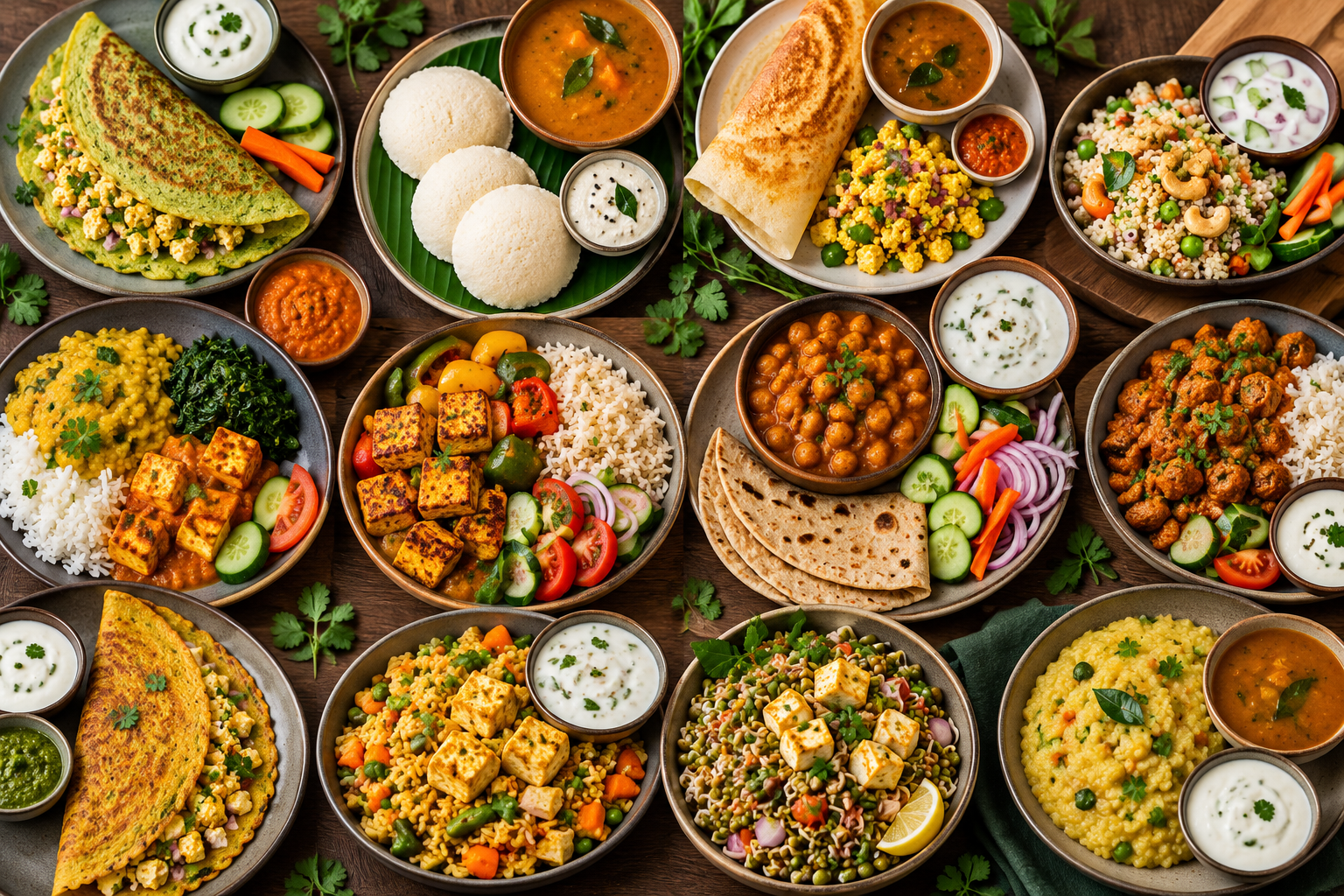
You don't need chicken, fish or eggs to build a protein-rich meal.
But vegetarian meals require a little more planning because many traditional vegetarian meals are dominated by carbohydrates.
Here are some better combinations.
What to eat
Cooked rice: 150 g
Soya chunks: 50 g dry weight
Vegetables: 150 g
Curd: 100 g
Cooking oil: 5 g
Approximate macros
560 kcal | 36 g protein | 70 g carbs | 13 g fat
Soya is one of the easiest vegetarian protein sources to use when you want to increase protein without dramatically increasing calories.
What to eat
Roti: 2
Paneer: 100 g
Dal: 100 g
Salad: 150 g
Approximate macros
600 kcal | 34 g protein | 58 g carbs | 25 g fat
A good example of combining multiple vegetarian protein sources in one meal.
What to eat
Cooked rice: 150 g
Rajma: 180 g cooked
Curd: 150 g
Vegetables: 150 g
Cooking oil: 5 g
Approximate macros
560 kcal | 25 g protein | 82 g carbs | 12 g fat
Rajma provides protein and fibre, while curd helps increase the overall protein content of the meal.
What to eat
Cooked rice: 150 g
Chana: 120 g cooked
Paneer: 70 g
Vegetables: 150 g
Approximate macros
610 kcal | 30 g protein | 75 g carbs | 21 g fat
Combining legumes with paneer makes it easier to reach a higher protein intake while still eating familiar Indian food.
What to eat
Pesarattu: 2 medium
Paneer: 100 g
Curd: 100 g
Vegetables: 100 g
Approximate macros
570 kcal | 34 g protein | 52 g carbs | 24 g fat
A vegetarian breakfast or dinner option that is substantially higher in protein than a typical dosa or tiffin meal by itself.
What to eat
Vegetable upma: 250 g
Whole eggs: 3
Curd: 150 g
Vegetables: 100 g
Approximate macros
560 kcal | 29 g protein | 65 g carbs | 20 g fat
Upma alone is usually not a particularly high-protein meal. Adding eggs and curd changes the balance.
What to eat
Cooked rice: 150 g
Moong dal: 150 g
Paneer: 80 g
Vegetables: 150 g
Approximate macros
600 kcal | 32 g protein | 70 g carbs | 21 g fat
A simple vegetarian combination that gives you protein from both legumes and dairy.
What to eat
Ragi dosa: 2 medium
Whole eggs: 3
Curd: 100 g
Vegetables: 150 g
Approximate macros
560 kcal | 29 g protein | 52 g carbs | 25 g fat
Ragi dosa can absolutely fit into a fat-loss diet. Focus on the overall meal rather than labeling individual foods as "good" or "bad."
What to eat
Cooked rice: 150 g
Chicken keema: 120 g cooked
Dal: 100 g
Vegetables: 150 g
Approximate macros
600 kcal | 48 g protein | 63 g carbs | 16 g fat
This is one of the higher-protein options on the list and works particularly well when you have a higher protein target.
What to eat
Cooked rice: 150 g
Thick curd: 200 g
Whole eggs: 2
Chana: 80 g cooked
Vegetables: 150 g
Approximate macros
580 kcal | 30 g protein | 75 g carbs | 17 g fat
Instead of having plain curd rice as the entire meal, add eggs, chana and vegetables to make it more balanced and protein-rich.
You don't need to completely change the food you grew up eating.
You need to change the way you build your plate.
Instead of:
Rice + charu
Try:
Rice + dal + eggs + vegetables
Instead of:
Dosa + chutney
Try:
Dosa + eggs + sambar
Instead of:
Ragi sangati + pappu
Try:
Ragi sangati + chicken + vegetables
Instead of:
Rice + vegetable curry
Try:
Rice + paneer/soya + vegetables
Every meal doesn't need to be perfect.
But if most of your meals contain:
A proper protein source + controlled carbs + vegetables + appropriate fats
you are already moving towards a much better diet.
Prati poota oka proper protein source.
That's the goal.