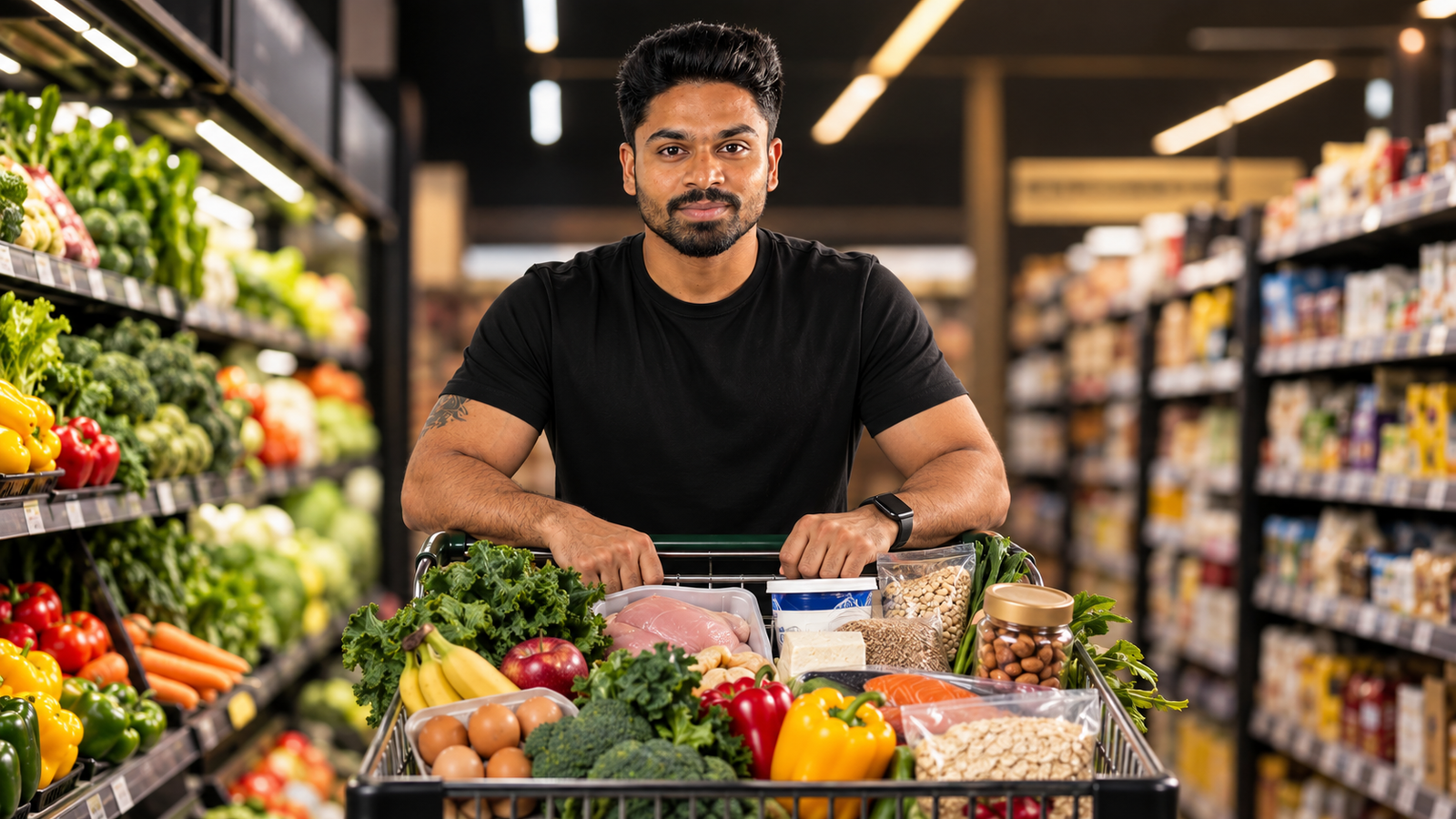
What a 1% Grocery Cart Looks Like: The Smart Grocery Shopping Guide for Sustainable Fat Loss
Sep 21, 2026
If you're vegetarian and trying to lose fat, one of the biggest challenges can be getting enough protein without completely changing the way you eat.
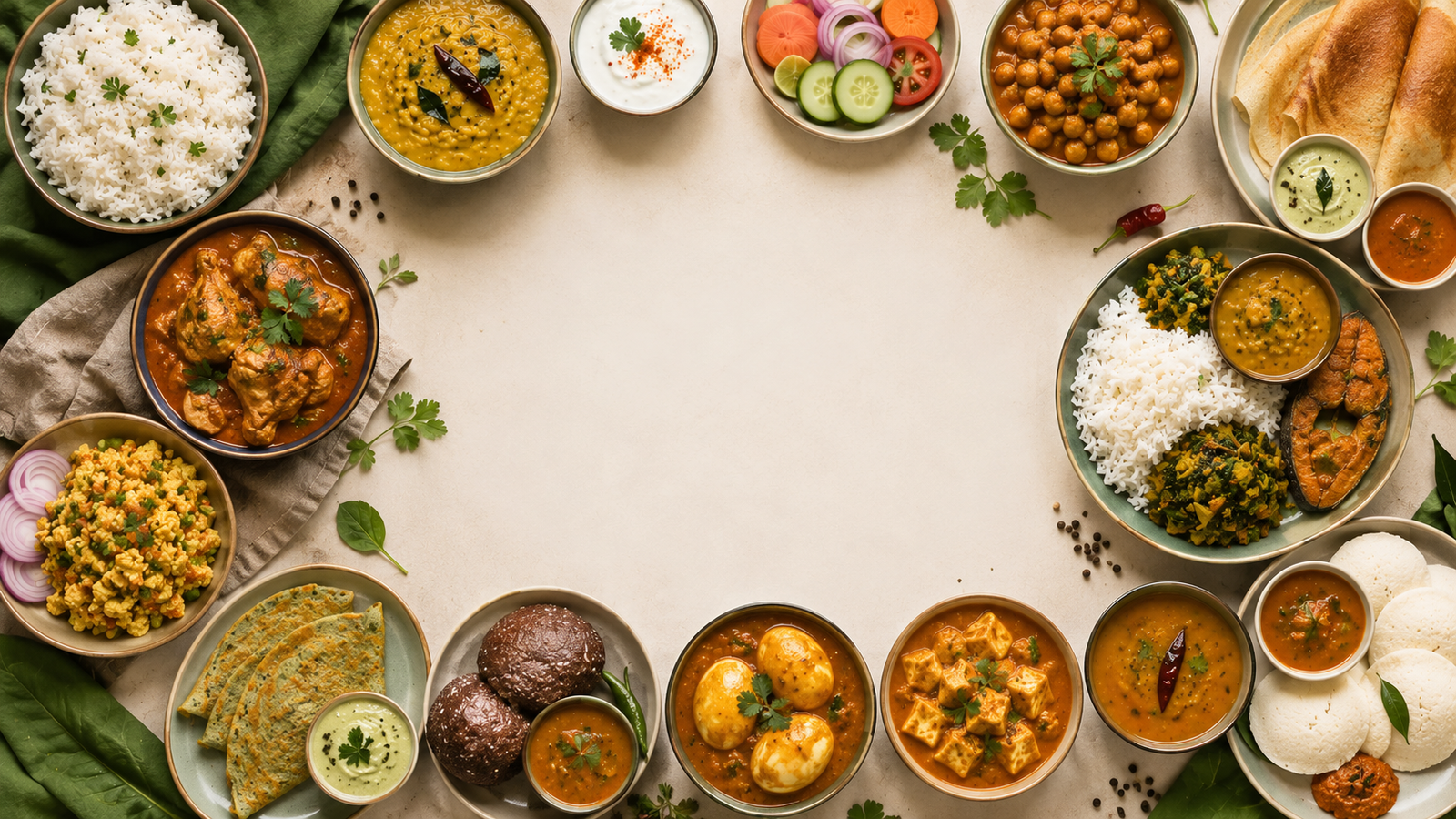
But you don't need to give up rice, dosa, idli, roti, pesarattu, upma or other traditional Telugu and South Indian foods.
The key is learning how to build a balanced vegetarian meal around a complete protein source.
In this guide, you'll find 20 practical vegetarian meal combinations that are:
Important: Calories and macros are estimates. Actual nutrition will vary depending on brands, recipes, portion sizes and cooking methods.
Protein is made up of amino acids. Your body needs nine essential amino acids that it cannot produce on its own and therefore needs to obtain through food.
A complete protein source provides all nine essential amino acids.
For a vegetarian diet, useful complete protein sources include:
Paneer • Milk • Curd • Greek yogurt • Tofu • Soy chunks and other soy foods
This is particularly useful when planning a high-protein vegetarian diet.
Legumes, grains, nuts and seeds also contribute valuable protein and nutrients. However, in this meal guide, we use complete protein sources as the main protein anchor of each meal.
When you're trying to lose body fat, your goal shouldn't simply be to make the number on the weighing scale go down.
Ideally, you want to lose body fat while maintaining as much lean muscle mass as possible.
Adequate protein, resistance training and an appropriate calorie deficit are important parts of that process.
Protein can also help with:
However, more protein is not automatically better.
Your ideal intake depends on factors such as your body weight, activity level, training, age and goal.
A high-protein meal doesn't mean eating only protein.
A balanced meal can include:
Choose:
Paneer • Tofu • Soy chunks • Greek yogurt • Curd
Choose:
Rice • Roti • Dosa • Idli • Pesarattu • Upma • Pongal
Add:
Leafy vegetables • Cucumber • Tomato • Carrot • Beans • Gourds • Cauliflower • Capsicum • Seasonal vegetables
Use measured portions of:
Oil • Nuts • Seeds
You don't need ghee to create a balanced meal.
Protein: ~30 g
Carbohydrates: ~55 g
Fat: ~17 g
Paneer + curd
Pesarattu provides carbohydrates, fibre and additional plant protein, while paneer and curd provide the main complete protein component.
Protein: ~28 g
Carbohydrates: ~60 g
Fat: ~13 g
Greek yogurt
Greek yogurt provides a concentrated complete protein source while pesarattu, vegetables and seeds make the meal more filling and nutrient-dense.
Protein: ~27 g
Carbohydrates: ~60 g
Fat: ~9 g
Greek yogurt
You don't have to eliminate idli during fat loss. Pairing it with a complete protein source and vegetables creates a much more balanced meal.
Protein: ~30 g
Carbohydrates: ~58 g
Fat: ~17 g
Paneer
Instead of having dosa with only chutney, adding paneer gives the meal a substantial complete protein source.
Protein: ~32 g
Carbohydrates: ~50 g
Fat: ~19 g
Paneer + curd
Paneer and curd provide complete protein while the moong dal chilla provides carbohydrates, fibre and additional plant protein.
Protein: ~27 g
Carbohydrates: ~65 g
Fat: ~12 g
Greek yogurt
You don't need to eliminate upma to increase your protein intake. Adding Greek yogurt creates a convenient complete protein component.
Protein: ~30 g
Carbohydrates: ~70 g
Fat: ~15 g
Paneer + curd
This keeps the traditional rice-and-dal combination while adding complete protein from paneer and curd.
Protein: ~28 g
Carbohydrates: ~65 g
Fat: ~14 g
Paneer
You can continue eating sambar rice while increasing the protein content with paneer.
Protein: ~28 g
Carbohydrates: ~78 g
Fat: ~11 g
Greek yogurt
Rajma provides protein and fibre, while Greek yogurt provides a complete protein source.
Protein: ~28 g
Carbohydrates: ~70 g
Fat: ~12 g
Greek yogurt
This keeps the meal familiar and satisfying while adding a concentrated complete protein source.
Protein: ~34 g
Carbohydrates: ~58 g
Fat: ~11 g
Soy chunks
Soy is a complete plant protein, making soy chunks particularly useful for vegetarians trying to increase their protein intake.
Protein: ~34 g
Carbohydrates: ~63 g
Fat: ~11 g
Soy chunks + curd
Soy provides the main complete plant protein while curd adds additional complete protein.
Protein: ~35 g
Carbohydrates: ~60 g
Fat: ~19 g
Paneer
Paneer provides the main complete protein source while dal contributes additional protein, fibre and micronutrients.
Protein: ~32 g
Carbohydrates: ~65 g
Fat: ~14 g
Tofu
Tofu is a complete plant protein and works particularly well for people who want more plant-based protein options.
Protein: ~33 g
Carbohydrates: ~48 g
Fat: ~22 g
Paneer + curd
Paneer and curd provide the complete protein component while besan provides additional plant protein and carbohydrates.
Protein: ~30 g
Carbohydrates: ~55 g
Fat: ~19 g
Paneer
Paneer provides the complete protein while sprouts and vegetables increase the fibre and overall nutrient density of the meal.
Protein: ~30 g
Carbohydrates: ~60 g
Fat: ~14 g
Tofu + curd
Tofu provides complete plant protein and curd adds another complete protein source.
Protein: ~28 g
Carbohydrates: ~70 g
Fat: ~11 g
Greek yogurt
Greek yogurt provides a concentrated complete protein source while the pongal and sambar contribute carbohydrates, plant protein and fibre.
Protein: ~35 g
Carbohydrates: ~60 g
Fat: ~19 g
Paneer
Paneer provides the main complete protein source while dal contributes additional plant protein and fibre.
Protein: ~32 g
Carbohydrates: ~65 g
Fat: ~13 g
Tofu + curd
Tofu provides complete plant protein while curd adds additional complete protein to this simple rice-based meal.
You don't need to follow these 20 meals exactly.
Use this simple framework.
Choose one:
Paneer | Tofu | Soy chunks | Greek yogurt | Curd
For larger meals, you can combine two sources.
For example:
Paneer + curd
or
Tofu + curd
or
Soy chunks + curd
Pick a portion that fits your calorie requirements:
Rice | Roti | Dosa | Idli | Pesarattu | Upma | Pongal
There is no requirement to remove carbohydrates to lose fat.
Aim for a generous serving of vegetables.
They add:
Use measured portions of:
Oil | Nuts | Seeds
Remember that fats are calorie-dense, so even healthy fats need portion control.
Rice itself does not prevent fat loss.
Fat loss primarily depends on maintaining an appropriate calorie deficit over time.
You can include rice in your diet while losing fat.
The important questions are:
How much rice are you eating?
How much protein is in the meal?
How many vegetables are you eating?
How much oil is being added?
Instead of completely removing rice, build a better meal around it.
Large serving of rice + little dal + pickle
Try:
Complete protein + controlled rice + vegetables + measured oil
This is much more sustainable.
Absolutely.
You don't need to classify foods as "fat-loss foods" and "weight-gain foods."
The overall diet matters.
Idli + chutney
Try:
Idli + sambar + Greek yogurt + vegetables
Dosa + chutney
Try:
Dosa + sambar + paneer/tofu + vegetables
Pesarattu + chutney
Try:
Pesarattu + paneer + curd + vegetables
The goal is to improve the overall meal composition.
One of the most common mistakes is assuming that a vegetarian meal is automatically high in protein.
For example:
Breakfast: Idli + chutney
Lunch: Rice + vegetable curry
Snack: Fruit
Dinner: Dosa + chutney
This can be a vegetarian diet, but it may still be relatively low in protein.
Instead, make it a habit to ask:
That simple question can completely change the way you build your meals.
Rather than eating most of your protein at dinner, distribute it across your meals.
A practical structure could be:
| Meal | Approximate Protein |
|---|---|
| Breakfast | 25-30 g |
| Lunch | 25-35 g |
| Snack | 15-25 g |
| Dinner | 25-35 g |
Your individual protein target should be based on your body weight, activity, training and goal.
Pesarattu + paneer + curd
~500 kcal
~30 g protein
Rice + dal + paneer + vegetables + curd
~550 kcal
~30 g protein
Greek yogurt + roasted chana + fruit
~300 kcal
~20 g protein
Soy chunk curry + rice + vegetables + curd
~500 kcal
~34 g protein
~1,850 kcal
~114 g protein
This is just an example. Your calorie and protein requirements should be individualised.
You don't need:
❌ Complicated recipes
❌ Completely separate "diet food"
❌ Eliminating rice
❌ Eliminating dosa
❌ Eating salads all day
❌ Living on protein shakes
Instead, learn to improve the meals you already eat.
Rice
Roti
Dosa
Idli
Pesarattu
Upma
Pongal
Paneer
Tofu
Soy
Curd
Greek yogurt
Vegetables
The goal is not to make your diet completely different.
The goal is to make your existing diet more balanced, protein-rich and calorie-aware.
Some practical complete protein sources include soy foods such as tofu and soy chunks, dairy foods such as paneer, curd and Greek yogurt, and other suitable animal-free protein foods depending on the individual's diet.
Yes. Dairy proteins such as those found in paneer provide all nine essential amino acids.
Yes. Soy protein is considered a complete protein because it provides all nine essential amino acids.
Soy chunks can be useful during fat loss because they provide a high amount of protein relative to their calorie content. Portion size and the way they are prepared still matter.
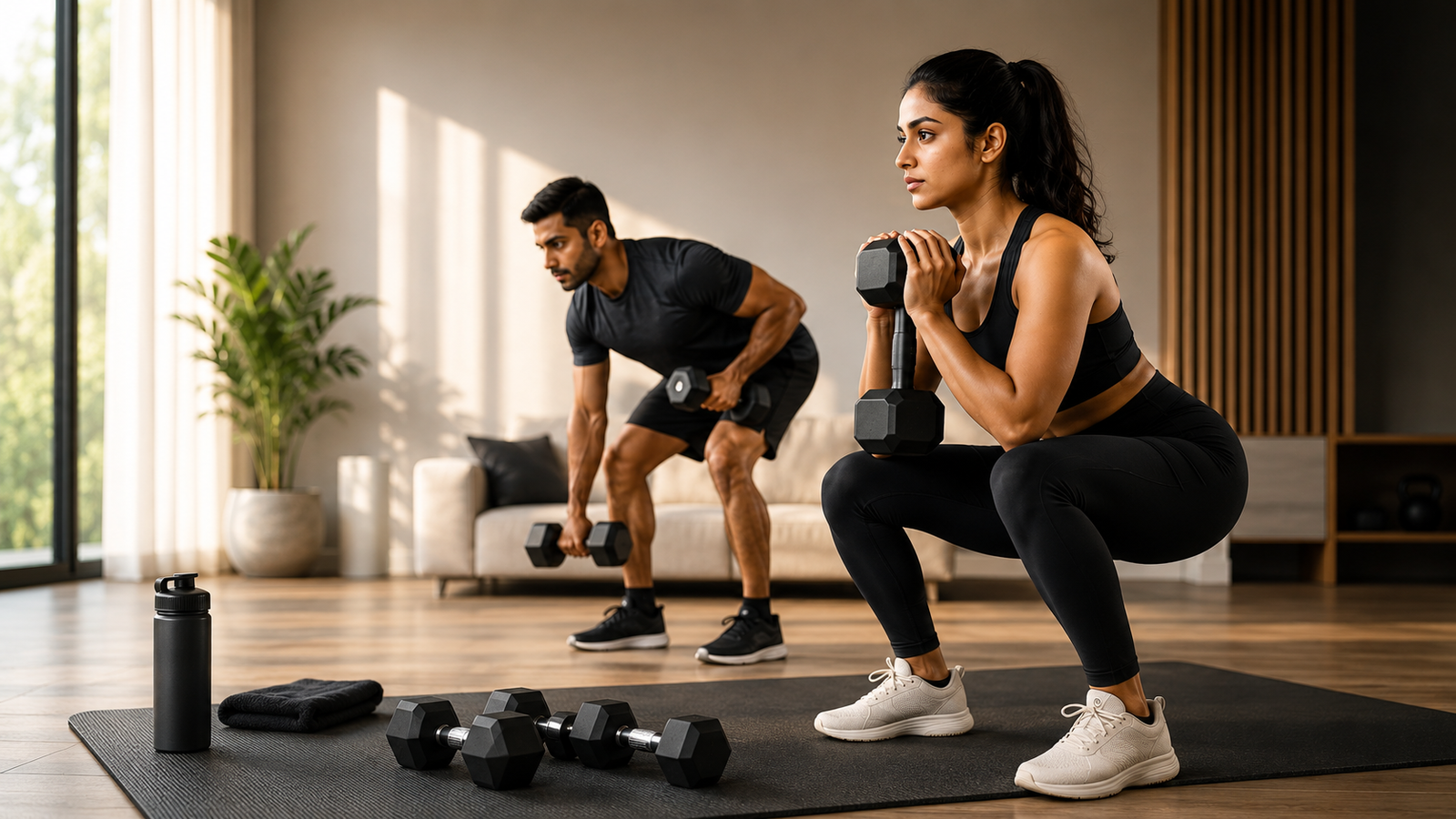
Yes. Vegetarians can build and maintain muscle with adequate protein, progressive resistance training, sufficient calories and appropriate recovery.
Yes. Rice can absolutely be included in a fat-loss diet. Total calorie intake and portion sizes matter more than completely eliminating rice.
There is no single number that applies to everyone. Protein requirements depend on body weight, training, activity, age and goals. Someone doing regular resistance training may need more protein than someone who is sedentary.
No. Protein powder is not mandatory. It can simply be a convenient way to increase protein intake when whole-food options are inconvenient.
Not necessarily. Vegetarian foods can still be highly processed or calorie-dense. A healthy vegetarian diet should contain adequate protein, vegetables, fibre, minimally processed foods and appropriate portions.
Absolutely. South Indian foods such as rice, dosa, idli, pesarattu, sambar and curd can all be incorporated into a fat-loss diet. The key is meal composition, portions, protein intake and overall calorie balance.
You don't have to give up your Telugu or South Indian food to lose fat.
You don't have to stop eating rice.
You don't have to stop eating dosa.
You don't have to stop eating idli.
You don't have to live on salads.
Instead, learn how to build meals around complete protein sources.
COMPLETE PROTEIN
CARBOHYDRATES
VEGETABLES & FIBRE
APPROPRIATE DIETARY FAT
That is a much more sustainable approach to vegetarian fat loss.
A list of meals is a great starting point.
But your ideal diet depends on your body weight, calorie requirements, protein target, activity level, training, food preferences and lifestyle.
If you're a busy Telugu or South Indian professional and want a personalised approach instead of another generic diet plan, Sustainable Balanced Fitness can help.
✓ Personalised calorie and protein targets
✓ South Indian and Telugu-friendly meal plans
✓ Vegetarian and non-vegetarian options
✓ Structured workout plans
✓ Weekly progress tracking
✓ Daily accountability
✓ Sustainable fat loss without extreme restriction
✓ Adjustments based on your progress and lifestyle
Apply for Sustainable Balanced Fitness Coaching
Get a personalised nutrition + workout strategy designed around your lifestyle, food preferences and fat-loss goal.
Limited coaching slots are available.